// Devcon field notes
Devcon 8 Mumbai — Day 2: Assessing Protocol Resilience, Connecting Ecosystems and Building Trustworthy Networks
· Mumbai, India
If Day 1 of the Resilient Networking Hub was about establishing the foundations of resilient Ethereum, Day 2 was about bringing the wider ecosystem together to examine what still needs to be built.
The second day of the libp2p Expedition at Devcon 8 focused on a fundamental challenge facing decentralized infrastructure: resilience cannot be achieved by individual protocols working in isolation. It requires collaboration across networking, storage, consensus, security, identity, observability, governance, and the communities maintaining these systems.
Our programme brought together protocol maintainers, researchers, institutional representatives, AI infrastructure builders, and open-source contributors for a full day of workshops, technical presentations, and collaborative discussions.
The highlight was our cross-ecosystem leadership roundtable:
Assessing Protocol Resilience: What Makes a Network Resilient, and What's Still Missing?
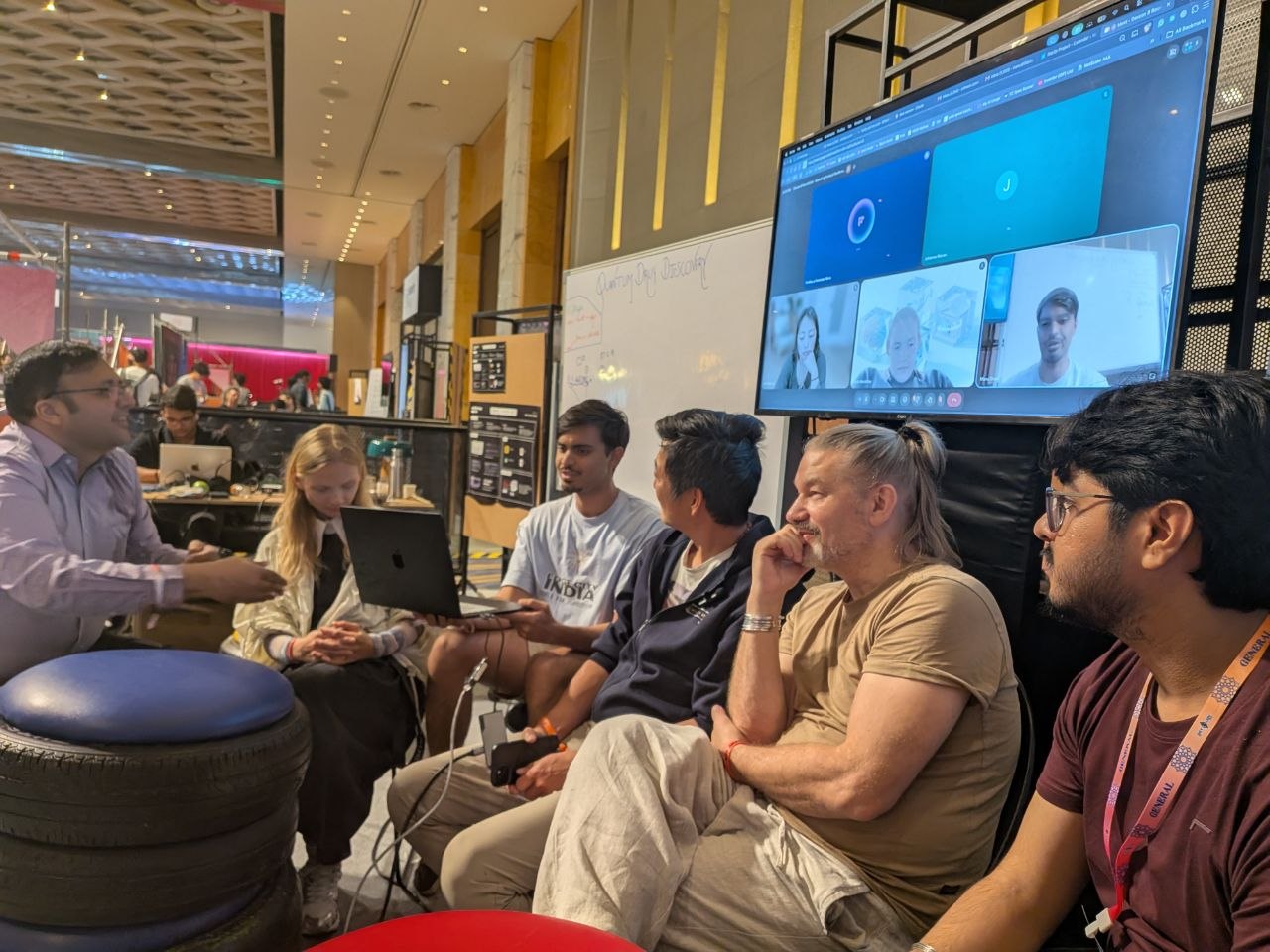
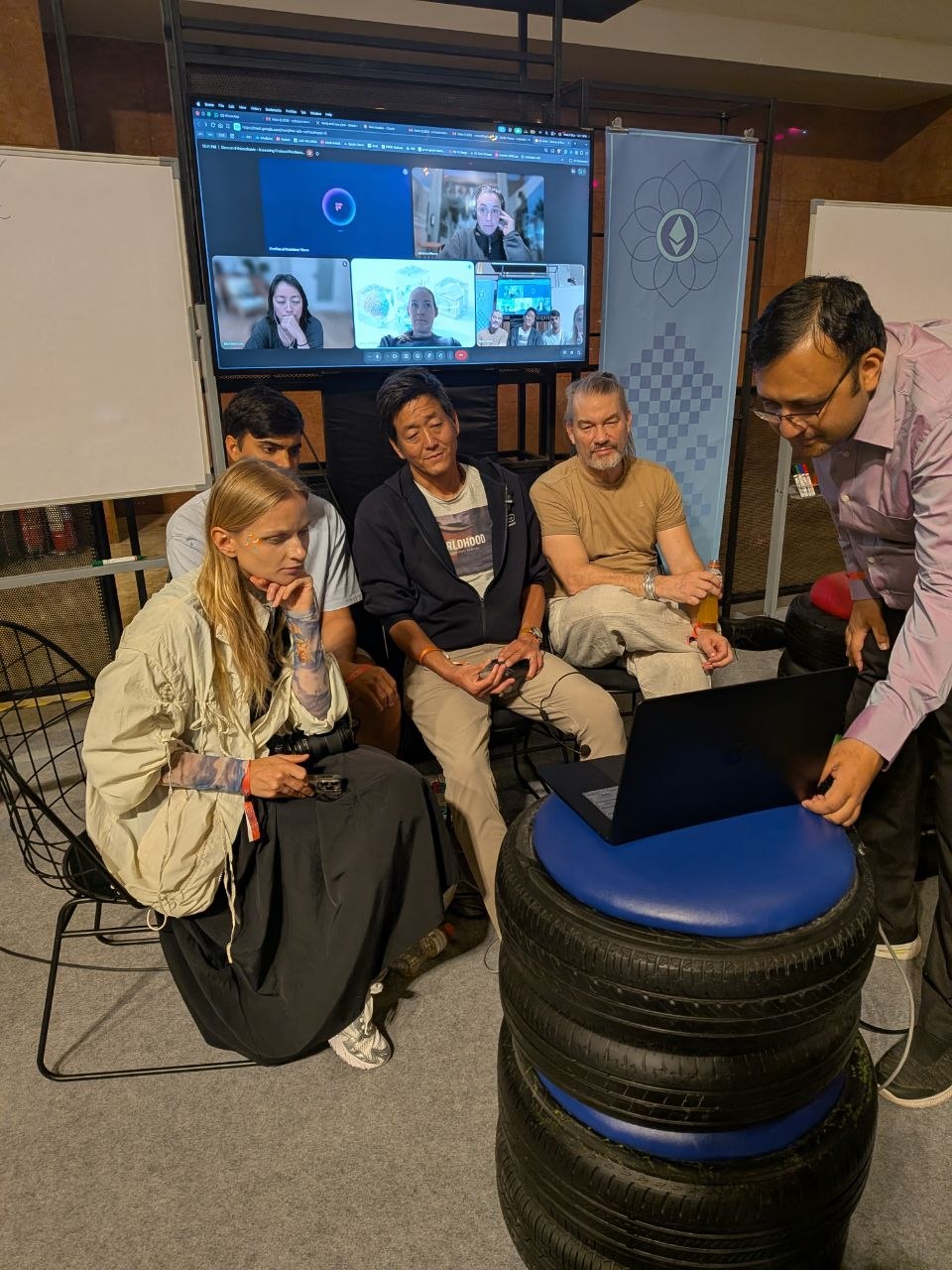
Moderated by Manu Sheel Gupta from libp2p, the roundtable brought together participants in person in Mumbai and leadership joining remotely, creating an opportunity to connect perspectives across multiple decentralized infrastructure ecosystems.
1. The Main Event: A Cross-Ecosystem Roundtable on Protocol Resilience
12:00–13:00 IST | November 4, 2026
How do we make decentralized networks resilient by design?
And more importantly, what critical gaps must we address together to ensure that these networks can support the next generation of decentralized applications, autonomous agents, and global infrastructure?
These were the central questions behind our Devcon roundtable.
Moderated by Manu Sheel Gupta from libp2p, the discussion brought together participants from the Ethereum Foundation, Ethereum Swarm, Action State AI, Linux Foundation, NITI Aayog's Atal Innovation Mission, and the QMeshPy community, alongside leaders joining online.
Participants
Joining remotely:
-
Molly Mackinlay, CEO · FilOz
-
Michelle Lee, Executive Director · IPFS
-
Johanna Moran — Strategy Lead · libp2p
Participating in person in Mumbai:
-
Thomas Humphreys — Ethereum Foundation.
-
Ethereum Swarm CTO — joining the discussion in person.
-
Steven Mih — Action State AI and Linux Foundation.
-
Miglė Rakitaitė — Ethereum Swarm.
-
Vishesh Mathur — NITI Aayog's Atal Innovation Mission (AIM).
-
Soham Bhoir — QMeshPy.
-
Manu Sheel Gupta — libp2p, roundtable moderator.
The combination of remote and in-person participation was particularly valuable. It allowed the discussion to extend beyond the people physically present at Devcon and connect different communities and institutional perspectives. Wish to also thank Ornella Vallana
Devcon · Ethereum Foundation
And Satyaki KC
Devcon
For their help in organizing this roundtable.
Why this conversation mattered
Protocol resilience is frequently discussed in terms of uptime, fault tolerance, and network availability. But these are only parts of a much larger picture.
A decentralized network must be able to discover peers, establish connections, route messages, store and retrieve information, verify actions, defend against adversaries, coordinate participants, observe its own health, and recover when components fail.
It must also remain operational when infrastructure becomes unavailable, participants disconnect, networks are partitioned, or adversaries attempt to censor or disrupt communication.
The roundtable was designed to examine this entire lifecycle rather than focus on individual protocol roadmaps.
The five dimensions of the discussion
1. Establishing a shared understanding of protocol resilience
We explored what resilience actually means across different ecosystems.
For libp2p, IPFS, Filecoin, Ethereum, and Ethereum Swarm, resilience can have different technical expressions, but the underlying objective is shared: decentralized systems must continue to function under adverse conditions without depending on a single institution, infrastructure provider, or point of failure.
2. Identifying critical technical and institutional gaps
The discussion considered the gaps that remain between the current state of decentralized infrastructure and what future applications will require.
These include challenges around:
-
Peer discovery and connectivity under restrictive network conditions.
-
Routing, interoperability, and cross-protocol communication.
-
Storage availability and data retrieval.
-
Cryptographic agility and post-quantum migration.
-
Security coordination and incident response.
-
Privacy-preserving observability and network measurement.
-
Sustainable maintenance of critical open-source dependencies.
We also considered the institutional dimension: how organizations and foundations can coordinate resources, expertise, and long-term maintenance without compromising the independence of open networks.
3. Understanding cross-protocol dependencies and systemic risks
Modern decentralized applications rarely depend on a single protocol.
An application may rely on Ethereum consensus, libp2p connectivity, IPFS content addressing, Filecoin storage, decentralized identity, and external computation or AI infrastructure.
A weakness in one component can have consequences across the wider stack.
The roundtable therefore explored the importance of understanding these dependencies, identifying shared failure modes, and developing better ways to reason about systemic risks.
4. Identifying opportunities for collaborative research and engineering
We discussed the potential for shared work across ecosystems, including:
-
Common resilience benchmarks and network testing methodologies.
-
Interoperability standards and implementation experiments.
-
Privacy-preserving network observability.
-
Post-quantum cryptographic readiness.
-
Security research and coordinated vulnerability disclosure.
-
Formal verification and independently verifiable protocol guarantees.
-
Shared tooling for measuring network health and recovery.
The objective was to move beyond parallel efforts and identify areas where collaboration could deliver greater ecosystem-wide impact.
5. Moving towards actionable follow-ups
Perhaps the most important objective was translating the discussion into practical next steps.
We wanted to identify a small number of shared research and engineering priorities, potential contributors and owners, and opportunities to establish timelines for continued collaboration.
The larger ambition was to make protocol resilience a sustained, collaborative effort rather than a conversation limited to one event.
Resilience as a shared ecosystem responsibility
One of the central ideas underpinning the roundtable was that no single protocol or organization can independently guarantee the resilience of the decentralized internet.
The Ethereum ecosystem, libp2p, IPFS, Filecoin, Ethereum Swarm, and the wider Linux Foundation open-source community all contribute different pieces of this infrastructure.
Bringing these communities together creates an opportunity to understand shared dependencies, exchange research, and coordinate improvements that benefit the entire ecosystem.
For us, this was precisely the purpose of convening the roundtable at Devcon.
2. Ethereum's Post-Quantum P2P Migration
09:00–10:00 IST | Shouki Tsuda and Ryosuke Kaga
We began the day with a workshop on one of the most important emerging challenges for decentralized networking:
Ethereum's Post-Quantum P2P Migration: Protocol Challenges and Implementation Approaches.
The session explored the implications of transitioning Ethereum's peer-to-peer networking layer towards post-quantum cryptography.
As quantum computing advances, cryptographic systems that underpin peer identity, secure connections, and authentication need to be evaluated for their long-term security.
The discussion examined implementation approaches and protocol-level challenges associated with introducing post-quantum cryptographic mechanisms into existing P2P infrastructure.
This is particularly important for networks expected to remain secure over long periods, where cryptographic agility and migration planning must become integral parts of protocol engineering.
3. Verifiable Agent Actions and Trustworthy Receipts
10:00–11:00 IST | Steven Mih
The next workshop explored the intersection of decentralized infrastructure, AI agents, and independently verifiable evidence.
Verifiable Agent Actions and Trustworthy Receipts: Open Standards and Independently Verifiable Evidence.
As AI agents increasingly interact with external systems, APIs, computational resources, and other agents, establishing trust in their actions becomes increasingly important.
The session examined how open standards and trustworthy receipts can help independently establish what an agent did, what evidence supports its actions, and how those actions can be verified by other participants.
This is an important building block for agent-native infrastructure, where autonomous systems need to coordinate across organizational and technical boundaries without relying entirely on centralized trust.
4. Distributed Quantum Services over P2P Networks
11:00–11:30 IST | Soham Bhoir
Soham Bhoir presented:
Distributed Quantum Services over P2P Networks: Coordinating Distributed Computation Using py-libp2p.
The session demonstrated how distributed computation involving quantum services can be coordinated across peer-to-peer networks using py-libp2p.
This brought together two interesting areas of emerging technology:
-
Distributed networking through libp2p.
-
Distributed access to quantum computational services.
The broader opportunity is to explore how decentralized networking can provide the connectivity and coordination infrastructure for computational resources distributed across different providers and environments.
5. libp2p and IPFS in Histopathology Labs
11:30–11:50 IST | Vishesh Mathur
Vishesh Mathur from NITI Aayog's Atal Innovation Mission presented:
libp2p and IPFS Case Study in Histopathology Labs.
This session brought an applied perspective to the programme by examining the use of decentralized networking and content-addressed storage in medical imaging workflows.
Histopathology laboratories generate large volumes of imaging data that need to be shared, stored, and accessed reliably.
The case study explored how libp2p and IPFS can contribute to these requirements.
It was a valuable reminder that decentralized infrastructure is not simply about blockchain applications or financial systems. Its potential extends to research, healthcare, public infrastructure, and other domains where reliable information sharing matters.
The participation of Vishesh also connected the technical discussions at the Hub with India's broader innovation ecosystem.
6. Sustaining Self-Hosted IPFS Infrastructure: Part II
11:50–12:00 IST | Daniel Thompson, Anurag Pandey and Manu Sheel Gupta
We continued the practical infrastructure track with a follow-up AMA:
Building and Sustaining Self-Hosted IPFS Infrastructure: Operations, Maintenance and Accessibility II.
Building decentralized storage infrastructure is only the beginning. Keeping it available, accessible, and maintainable requires continuous operational work.
The discussion continued the themes introduced on Day 1, focusing on practical considerations for running self-hosted IPFS infrastructure.
This also reinforced an important principle of the expedition: decentralized infrastructure needs more operators, maintainers, documentation, and accessible tooling if it is to achieve sustainable adoption.
7. Research Sessions: Formal Verification, Lean and Distributed Networking
14:00–15:00 IST | Banri Yanahama and Ryosuke Kaga
Following the roundtable and lunch, the programme returned to the foundations of protocol correctness.
The research workshop explored:
Formal Verification, Lean and Distributed Networking.
Formal verification offers a way to reason systematically about protocol behaviour and establish stronger guarantees about implementation correctness.
Connecting formal methods with distributed networking is especially important because decentralized protocols operate across independent participants, asynchronous environments, and complex failure conditions.
The workshop continued the conversations from Day 1 around mechanically checked correctness and the role of Lean in strengthening confidence in distributed systems.
8. Agentic P2P Infrastructure from Zero
15:00–15:30 IST | Steven Mih, Yash Saini, Anurag Pandey and Kazuma Sengoku
The afternoon continued with:
Agentic P2P Infrastructure from Zero: Discovery, Identity, Communication and Network Trust.
As autonomous agents become more capable of operating independently, they will need infrastructure that allows them to discover other agents, establish identities, communicate securely, and develop trust relationships.
This workshop explored these foundational requirements through the lens of peer-to-peer networking.
The discussion connected several themes from the expedition:
-
Decentralized peer discovery.
-
Cryptographic identity and key ownership.
-
Secure communication between independent agents.
-
Trust establishment without centralized intermediaries.
-
Resilient coordination across distributed environments.
The emerging agent economy will require more than intelligent models. It will require an open networking substrate through which agents can interact and coordinate.
9. Enshrined Payment Channels: Stateless, Post-Quantum and Confidential Rollup Design
15:30–16:10 IST | Leona Hioki
We also featured a research presentation by Leona Hioki:
Enshrined Payment Channels: A Stateless, Post-Quantum, Confidential Rollup Design.
The session explored a rollup design combining payment channels, statelessness, post-quantum considerations, and confidentiality.
These are important areas of research as decentralized financial infrastructure evolves towards more scalable, privacy-preserving, and cryptographically resilient systems.
The presentation added another dimension to the day's broader discussions about how security and resilience must be considered across the entire decentralized stack.
10. Towards a Credibly Neutral Methodology for Protocol Risk Management and Public Goods Funding
16:10–17:00 IST | Thomas Humphreys, Manu Sheel Gupta, Vishesh Mathur, Anurag Pandey and Kazuma Sengoku
One of the important afternoon discussions focused on the relationship between protocol resilience, ecosystem coordination, and sustainable public goods funding.
The workshop explored:
Towards a Credibly Neutral Methodology for Protocol Risk Management and Public Goods Funding in the Resilient Networking Ecosystem.
Critical open-source protocols often underpin infrastructure used by thousands of projects and organizations.
However, the resources available for maintaining these protocols do not always reflect their importance to the wider ecosystem.
The session considered how to approach protocol risk management and public goods funding in a more systematic and credibly neutral manner.
Key areas included:
-
Identifying critical protocol dependencies.
-
Understanding the systemic impact of maintenance gaps.
-
Evaluating security and operational risks.
-
Developing evidence-based approaches to prioritizing funding.
-
Encouraging sustainable contributions across protocol ecosystems.
-
Coordinating institutional support while preserving open governance.
The broader goal was to connect technical risk assessment with sustainable funding mechanisms, ensuring that critical decentralized infrastructure receives the attention and resources it needs.
11. Resilient Networking from the Ground Up Using libp2p and IPFS
17:00–18:00 IST | Sumanjeet, Yash Saini, Daniel Thompson, Soham Bhoir and Anurag
The day continued with a hands-on workshop:
Resilient Networking from the Ground Up Using libp2p and IPFS.
This session brought the day's research themes back into practical engineering.
Participants explored how libp2p and IPFS can be used together to build decentralized applications and resilient networking infrastructure.
The workshop highlighted the complementary roles of the two technologies:
-
libp2p provides peer-to-peer connectivity, discovery, and communication.
-
IPFS provides content addressing and decentralized content distribution.
Together, they provide important building blocks for applications that need to communicate and exchange information without depending exclusively on centralized infrastructure.
The session also provided an opportunity for contributors to engage directly with the tools and implementation approaches powering decentralized networking.
12. Demonstrating Universal Connectivity in py-libp2p
18:00–18:10 IST | Sumanjeet
We concluded the official programme with a short demonstration:
Universal Connectivity Project in py-libp2p.
Sumanjeet showcased work on universal connectivity within the Python implementation of libp2p.
The demonstration provided a practical conclusion to a day focused on protocol interoperability, connectivity, and resilience.
It also reflected the importance of implementation diversity within the libp2p ecosystem: enabling developers to build, experiment, and contribute across different programming languages and environments.
13. The Bigger Picture: Resilience Requires Collaboration
Day 2 was an important milestone for the Resilient Networking Hub.
The cross-ecosystem roundtable brought together perspectives that are essential to understanding the future of decentralized infrastructure.
From Ethereum and libp2p to IPFS, Ethereum Swarm, AI infrastructure, quantum networking research, and public-sector innovation, the discussions demonstrated that resilience is not a property that can be delivered by one protocol alone.
It emerges from the interactions between multiple systems, their operators, their maintainers, and the communities responsible for their long-term sustainability.
Several themes stood out throughout the day:
-
Post-quantum readiness: Preparing decentralized networks for emerging cryptographic threats.
-
Verifiable systems: Establishing independently checkable evidence for protocols, computation, and autonomous agent actions.
-
Interoperability: Connecting different implementations, protocols, and computational environments.
-
Decentralized infrastructure: Making peer-to-peer networking and content-addressed storage practical for real-world applications.
-
Protocol risk management: Understanding systemic dependencies and improving how critical open-source infrastructure is maintained and funded.
-
Cross-ecosystem coordination: Bringing organizations and technical communities together to address challenges that cannot be solved independently.
Perhaps the most important takeaway was that the next generation of decentralized applications and autonomous agents will need a much stronger infrastructure foundation.
Networks must be able to survive disconnection, resist censorship, protect privacy, withstand adversarial conditions, and recover from failures.
Achieving this requires sustained engineering, shared research, open standards, and long-term collaboration.
Day 2 was about moving from individual protocol resilience towards a shared vision of ecosystem resilience.
And that conversation is one we intend to continue well beyond Devcon.
About the Resilient Networking Hub
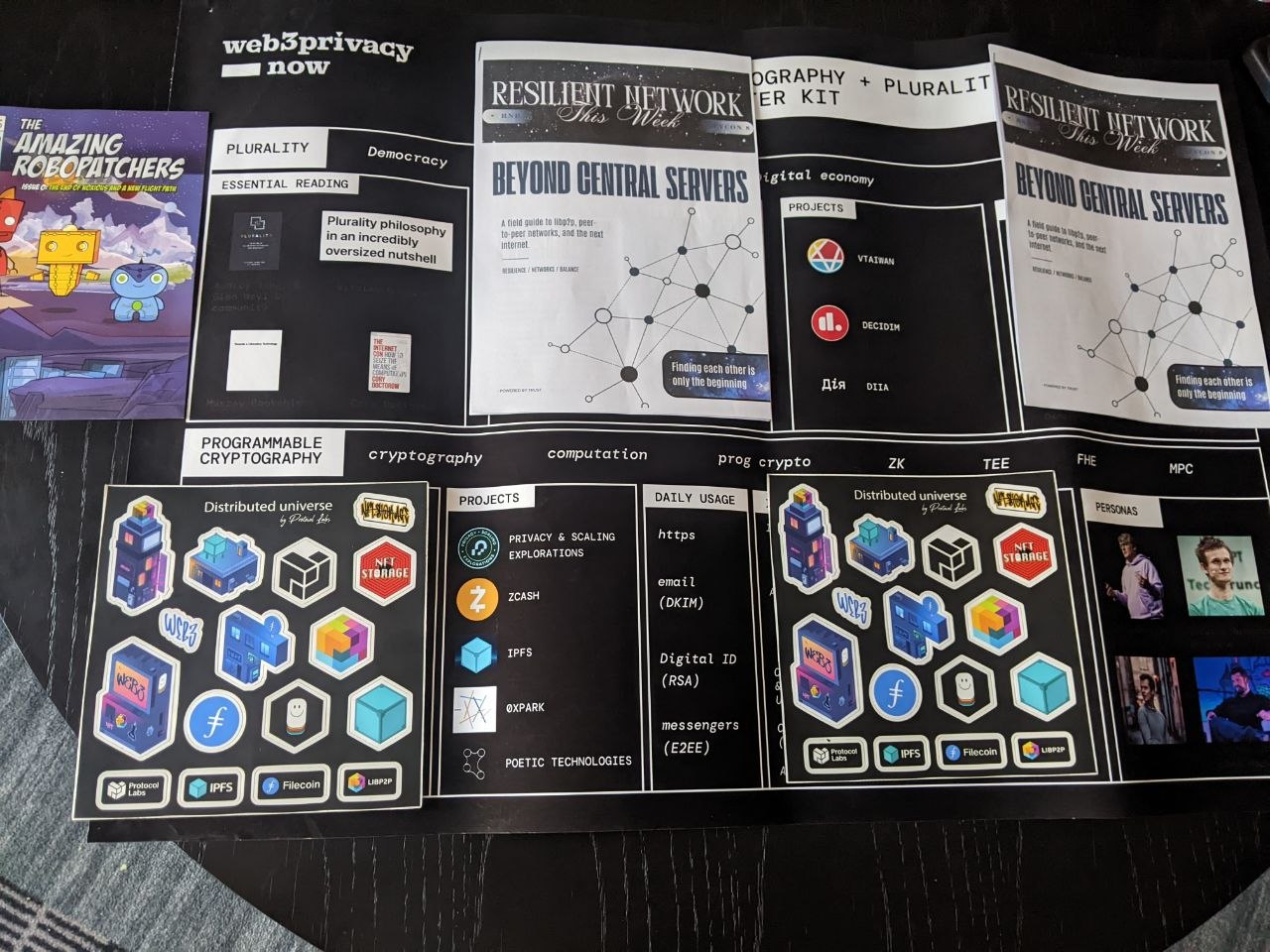
The Resilient Networking Hub was organized as part of the libp2p Expedition Mumbai, running from October 31 to November 8, 2026.
The four-day programme at Devcon 8, November 3–6, brought together protocol maintainers, researchers, developers, institutions, and open-source communities to advance resilient networking, privacy, security, interoperability, formal verification, and decentralized infrastructure.
Explore the programme: https://libp2p.tech/devcon
Explore the Day 2 Devcon schedule:https://libp2p.tech/schedule
Build resilient networks. Connect ecosystems. Strengthen the foundations of the decentralized internet.