// Devcon field notes
Devcon 8 Mumbai — Day 3: Strengthening Ethereum Security Coordination, Advancing LeakDetect AI and Building Resilient Networks
· Mumbai, India
At Devcon 8 in Mumbai, we had the opportunity to collaborate with the Security Hub on important discussions and initiatives around Ethereum ecosystem security, including LeakDetect AI and scaling security coordination across Ethereum Consensus Clients.
The collaboration brought together security researchers, protocol developers, and ecosystem contributors to explore how security practices can become more coordinated, actionable, and effective across the Ethereum client ecosystem.
A key focus was the work being undertaken by the libp2p team to strengthen security coordination among Ethereum Consensus Clients. As critical infrastructure for Ethereum, consensus clients benefit from more structured communication, clearly defined responsibilities, shared operational workflows, and stronger collaboration between client teams and the Ethereum Foundation.
Our discussions covered three complementary areas:
1. Coordination and security workflows
We focused on establishing more effective monthly coordination calls, clarifying roles and responsibilities, and enabling better security management workflows across the ecosystem.
The discussion also covered recommendations for structuring these calls to make them more productive and actionable.
libp2p discussion: Coordination and security workflows
2. Operations and collaboration with the Ethereum Foundation
The second area focused on the operational perspective: the tools, processes, and workstreams that could enable stronger collaboration with the Ethereum Foundation regarding Consensus Clients.
The goal is to develop practical mechanisms that support ongoing coordination and improve how security-related work is managed across the client ecosystem.
libp2p-2035 discussion: Operations and collaboration
3. Presentation for Ethereum Client Teams
We also prepared a presentation covering the key points discussed, including possible coordination workflows and recommendations.
Johanna and I offered to present this material remotely to the Ethereum client teams, providing an opportunity to share the proposals and continue the conversation with the wider group.
Presentation for Ethereum Client Teams
The presentation includes a more detailed version outlining possible workflows discussed during the coordination session.
LeakDetect AI and security innovation
Our Security Hub collaboration also included a contribution on LeakDetect AI, connecting AI-assisted security research with the broader need to improve security practices across decentralized infrastructure.
Together, these discussions reflected an important principle: securing Ethereum requires more than individual client implementations. It requires sustained coordination, shared operational practices, effective tooling, and collaboration across the teams responsible for maintaining critical network infrastructure.
We are grateful to the Security Hub team for creating the space to bring these discussions forward and collaborate on practical ways to strengthen Ethereum ecosystem security.
When the Network Shuts You Out: Measuring Resilience in Permissionless Networks
12:30 PM IST | Lotus Stage 3 (L3) | Manu Sheel Gupta
Manu Sheel Gupta also delivered an on-stage talk at Devcon 8 titled “When the Network Shuts You Out: Measuring Resilience in Permissionless Networks.”
Manu is a Technical Lead and maintainer across libp2p, Multiformats, and IPLD, working on peer-to-peer networking, secure communication channels, post-quantum client interoperability, decentralized systems, and open Internet infrastructure. His work focuses on secure, resilient, and permissionless networks through open standards, security research, and open-source development. He is also a volunteer contributor to the Trillion Security Research (1TS) initiative at Ethereum.
The talk addressed a critical challenge for permissionless networks:
What happens when censorship, Internet shutdowns, or infrastructure failures isolate parts of a permissionless network?
Drawing on real libp2p deployments, including Zemzeme and Qaul, the presentation explored how observability, regional nodes, DNS-based discovery, and rapid infrastructure recovery can help keep peer-to-peer networks connected under adverse conditions.
It also examined how resilience can be measured in practice—not simply by whether a network remains online under normal conditions, but by its ability to maintain or restore connectivity when parts of the surrounding Internet become unavailable or hostile.
Questions from the audience
The talk prompted questions covering practical entry points into decentralized connectivity, network testing, gossip protocols, privacy-preserving observability, and the economics of peer-to-peer networks.
Some of the questions raised included:
-
Getting started with decentralized connectivity: “This is my first time exploring dVPN and other decentralised connectivity and how we can make it resilient. Can you please tell me what should I start with to build a good base?”
-
Automated resilience testing: “Can network resilience be measured through automated testing by simulating node failures, network latency and connectivity disruptions?”
-
Gossip protocol design: “Is there any use case where Floodsub would be better to use instead of Gossipsub?”
-
Privacy-preserving network health: “How do you track network health and performance in a zk (zero-knowledge) system where data is private?”
-
Economic incentives and adversarial behaviour: “Is there economic value attached to the general p2p gossip? If not, how is it secured against a funded attacker who can set up many long-lived nodes which could get good ranks?”
These questions highlighted the breadth of challenges involved in building resilient permissionless networks. Resilience is not only a matter of connectivity: it also involves protocol design, testing under failure conditions, privacy-aware observability, incentive mechanisms, and protection against adversarial behaviour.
Connecting with the Next Generation of libp2p and IPFS Startups
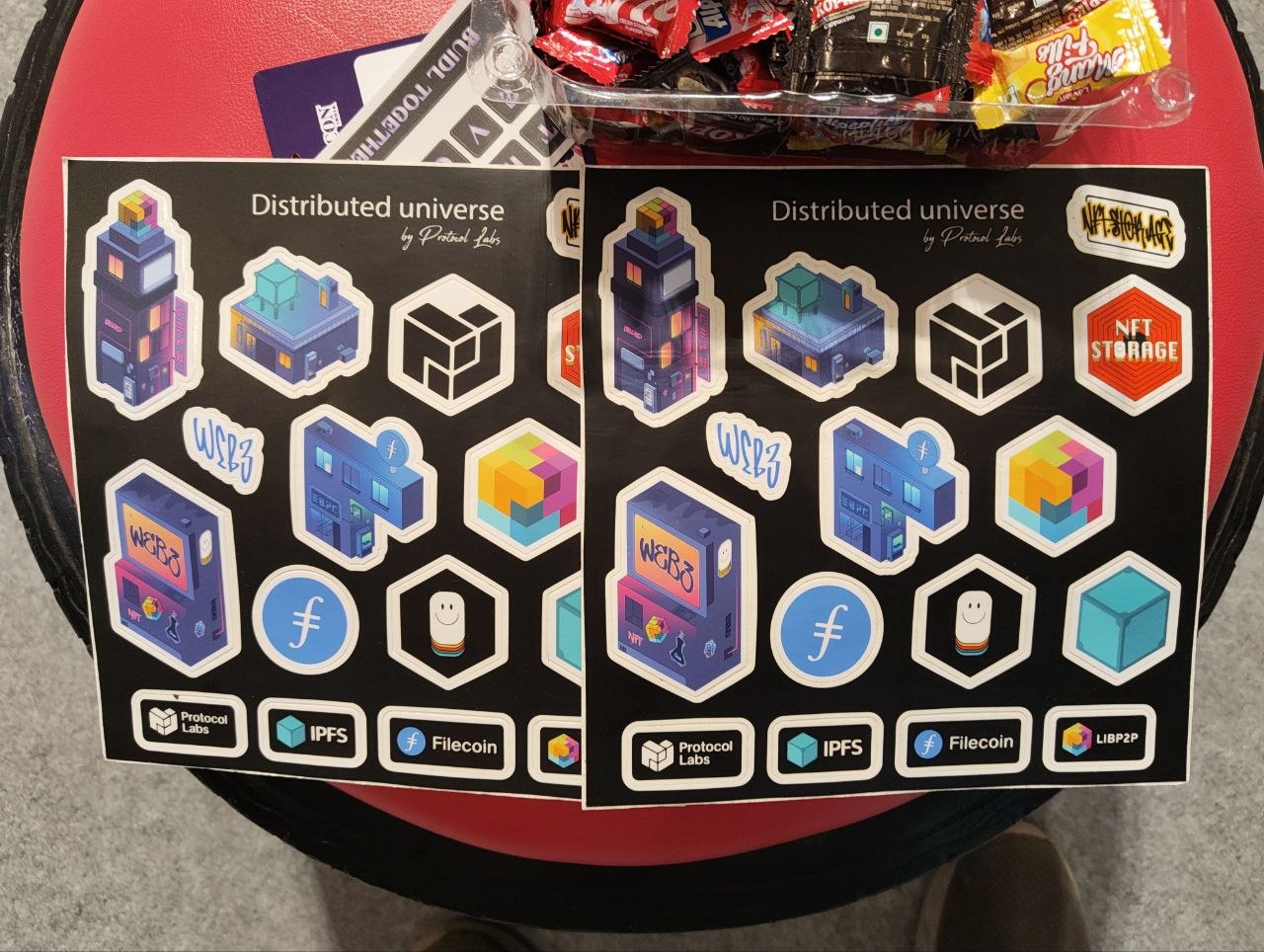
During the first two days of Devcon, we also had discussions with multiple startups selected by Founders Garage that are building with libp2p and IPFS.
These conversations provided an opportunity to learn about emerging products and teams, understand their infrastructure requirements, and discuss how decentralized networking and storage protocols can support real-world applications.
Engaging with early-stage builders is an important part of strengthening the ecosystem. Their experiences help surface practical requirements around connectivity, reliability, developer experience, security, and scaling—areas where open-source protocol communities can contribute directly.
Decentralized Media Day at the Resilient Networking Hub
The Resilient Networking Hub also hosted a full programme dedicated to decentralized media, bringing together builders, researchers, developers, and contributors working across decentralized storage, publishing, streaming, music distribution, and digital ownership.
The programme explored how decentralized technologies can give creators and communities greater control over how information is published, stored, accessed, and shared.
Explore Decentralized Media Day at the Resilient Networking Hub
1. Decentralized Office Hours — Swarm Technical Team
09:00–09:40 IST
The day opened with decentralized office hours hosted by the Swarm technical team. This drop-in session provided an opportunity for participants to bring questions about decentralized publishing, storage, streaming, and frontend development.
2. Welcome: Why Media Matters and Why It Belongs on Blockchain
09:40–09:50 IST | Miglė Rakitaitė
Miglė Rakitaitė opened the programme with an introduction to the importance of decentralized media and the role blockchain-based infrastructure can play in shaping its future.
3. Decentralized Server: An Introduction to Swarm
09:50–10:20 IST | Henning Diedrich, CTO, Swarm Foundation
Henning Diedrich introduced Swarm and its approach to decentralized server infrastructure, exploring how distributed storage and serving can support applications beyond conventional centralized hosting.
4. Take Your Frontend Off Traditional Hosting
10:20–11:05 IST | Rampall
This practical workshop focused on moving frontend applications away from traditional hosting environments and deploying frontend experiences through decentralized infrastructure.
5. Decentralized Solutions for Fairer Music Distribution
11:05–11:40 IST | Alaska, Subcult
Alaska from Subcult explored how decentralized technologies could contribute to fairer music distribution and give creators greater agency over their work.
6. Music Distribution in Practice: Artists, Platforms and Ownership
11:40–12:10 IST | Mina Spiler and special guests
This panel brought the discussion into the practical realities of music distribution, focusing on the relationships between artists, platforms, and ownership.
7. Preserving Living Knowledge: Joyma’s Permanent Archive as Decentralised Storage
12:10–12:45 IST | Henry Bergström
Henry Bergström presented Joyma’s approach to preserving living knowledge through permanent decentralized storage, exploring the importance of long-term preservation and accessibility.
8. Rethinking Who Holds Our Data
12:45–13:00 IST | Kelly Joo
Kelly Joo examined questions of data ownership and control, inviting participants to reconsider who holds and manages information generated and shared through digital systems.
9. Lunch
13:00–14:00 IST
A midday break provided time for participants, speakers, and builders to connect across the communities represented at the Hub.
10. Decentralized Streaming: From Camera to Viewer
14:00–15:00 IST | Levante Kiss, Solar Punk
Levante Kiss led a practical workshop exploring the streaming journey from camera to viewer and the infrastructure involved in delivering media through decentralized systems.
11. Collaborative Editing in Remix: Live Demo
15:00–15:30 IST | Bálint Ujvári, Solar Punk
Bálint Ujvári demonstrated collaborative editing in Remix, exploring shared creative workflows using decentralized tools and infrastructure.
12. The Web3 Database
15:30–16:00 IST | Henning Diedrich, CTO, Swarm Foundation
Henning Diedrich presented the Web3 Database, examining decentralized data infrastructure and its relevance to applications built for the Web3 ecosystem.
13. One Key to Publish
16:00–16:30 IST | Chris Hobcroft
Chris Hobcroft presented “One Key to Publish,” exploring a publishing experience centered on key-based access and decentralized infrastructure.
14. Freedom Browser: Browse and Publish on Swarm Without Gateways
16:30–17:30 IST | Meinhard Benn
Meinhard Benn led a hands-on workshop and live demonstration of the Freedom Browser, exploring how users can browse and publish on Swarm without relying on gateways.
Building Resilient Networks and a Stronger Security Ecosystem
The activities across the Security Hub, Devcon stages, Founders Garage, and Resilient Networking Hub reflected several connected dimensions of decentralized infrastructure.
Decentralized media requires infrastructure for publishing, storage, streaming, and data ownership. Permissionless networks need to withstand censorship, Internet disruptions, and infrastructure failures. Ethereum's consensus clients also benefit from stronger security coordination and shared operational practices.
These are not isolated challenges. They are connected parts of the work required to build an open, resilient, and secure Internet.
A key takeaway from Devcon was the importance of connecting protocol research and open-source development with the needs of application builders, startups, researchers, and security teams. Real deployments and practical questions help identify where protocols, tooling, standards, and collaboration need to evolve.
Thank You
A huge thanks to the @thedaofund team for the invitation to the Security Hub and for creating a great platform at @EFDevcon.
It was wonderful to contribute multiple sessions and workshops and be part of such an amazing gathering of builders, researchers, and security experts. I appreciate your support and collaboration. Looking forward to building together and continuing these conversations.
Special thanks to @anamarie_com, @griffgreen, and @GivJake for their support, encouragement, and feedback.
And thanks to all the speakers, workshop leaders, contributors, organizers, and participants who made the Resilient Networking Hub and Decentralized Media Day possible.
Building a more resilient Internet takes more than protocols. It takes open collaboration, shared security practices, and communities committed to keeping networks permissionless, accessible, and resilient.