
// Devcon field notes
Devcon 8 Mumbai — Day 4: Making Protocol Resilience Actionable — From Research to Trustworthy Infrastructure
· Mumbai, India
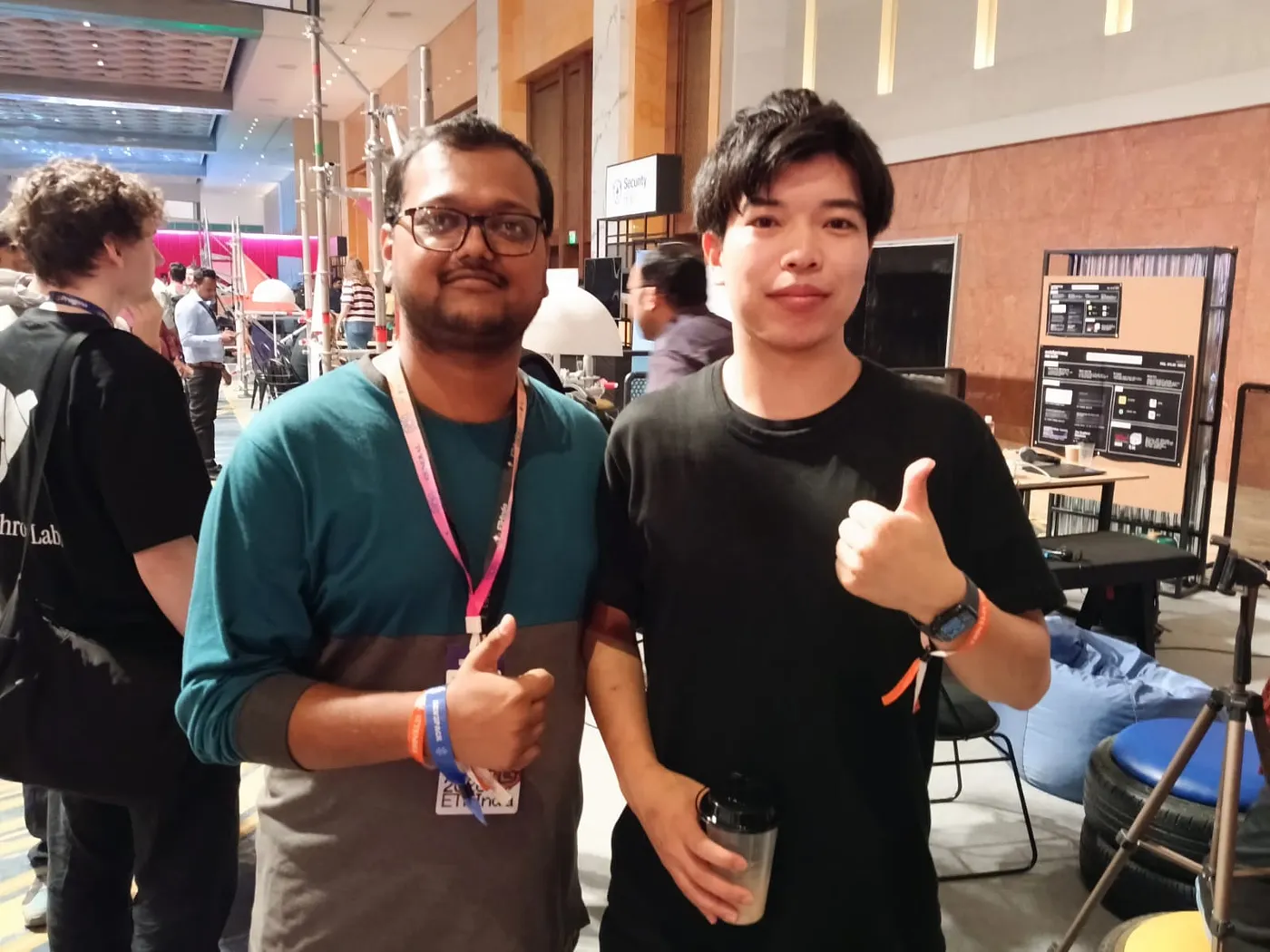
After four days of conversations, workshops, research presentations, and collaborative experiments, November 6 marked the concluding day of the Resilient Networking Hub at Devcon 8 Mumbai.
Throughout the week, we had explored the foundations of resilient Ethereum, brought together leadership and technical communities across decentralized ecosystems, examined post-quantum security, and investigated how formal verification, privacy-preserving observability, and verifiable computation could strengthen decentralized infrastructure.
Day 4 brought these themes together around one central question:
How do we turn protocol resilience from an idea into concrete, actionable engineering, research, and ecosystem coordination?
The final day of the libp2p Expedition's official Devcon programme focused on post-quantum cryptography, the observability stack for the Internet of Agents, formal verification, IPFS contributions, zero-knowledge proofs, and trustworthy infrastructure.
The highlight was our concluding cross-ecosystem roundtable:
Making Protocol Resilience Actionable.
It was an opportunity to move beyond identifying challenges and focus on the practical steps needed to address them.
1. Post-Quantum Cryptography in libp2p: Preparing for the Next Cryptographic Era
09:00–10:00 IST | Shouki Tsuda and Manu Sheel Gupta
We opened the final day with:
Post-Quantum Cryptography in libp2p: PQ Support, Migration Considerations and Cryptographic Resilience.
Post-quantum security has become an increasingly important consideration for the long-term sustainability of decentralized infrastructure.
Peer-to-peer networks depend on cryptographic mechanisms for identity, authentication, secure connections, and establishing trust between participants.
As quantum computing evolves, existing cryptographic assumptions need to be reassessed, and protocols must prepare for the possibility of transitioning towards quantum-resistant alternatives.
The workshop explored post-quantum cryptography support in libp2p, including migration considerations and the engineering challenges involved in strengthening cryptographic resilience.
Important areas of consideration included:
- Preparing peer-to-peer protocols for post-quantum cryptographic algorithms.
- Exploring hybrid key-exchange approaches.
- Understanding the implications of quantum-resistant peer identities.
- Maintaining interoperability during cryptographic transitions.
- Designing for cryptographic agility and long-term security.
- Considering how different implementations can adopt post-quantum capabilities consistently.
The broader message was that post-quantum readiness cannot be treated as a future upgrade. It needs to become part of the ongoing design and maintenance of decentralized networking infrastructure.
2. Scaling the Observability Stack for the Internet of Agents
10:00–10:40 IST | Manu Sheel Gupta and Steven Mih
Our next session explored the intersection of decentralized networking, AI agents, verifiable actions, and open standards.
Scaling Observability Stack for the Internet of Agents.
As autonomous agents become increasingly interconnected, the infrastructure supporting them will need more than conventional monitoring and logging.